

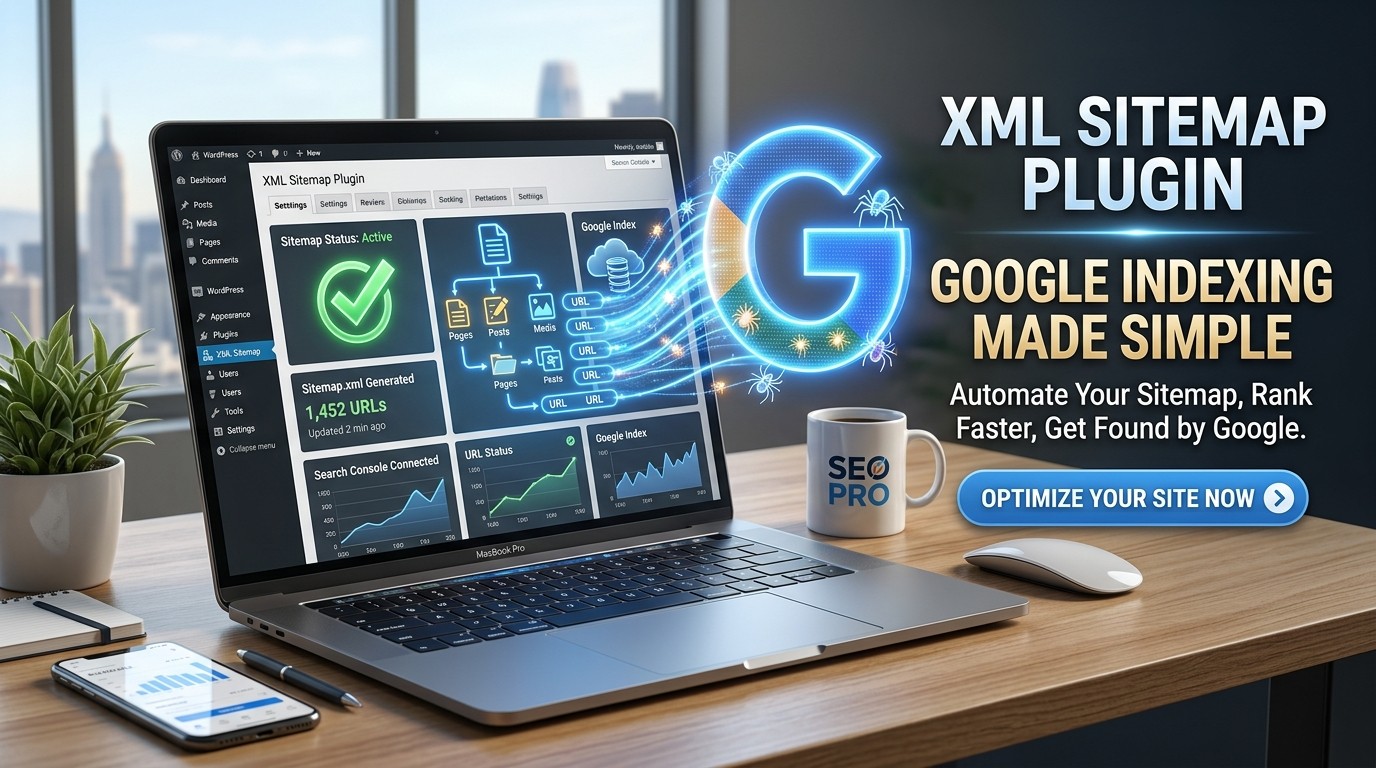
An XML Sitemap Plugin helps search engines discover important pages faster, reduce crawl waste, and understand site structure, making indexing more consistent, strategic, and easier to manage.
A well-built website can still struggle to appear in search results if search engines cannot find the right pages quickly. That is where an XML Sitemap Plugin becomes valuable. It acts like a clean road map for crawlers, helping them locate pages, posts, categories, and other important resources without confusion. For site owners, this simple layer of structure can make indexing more predictable, especially when a website grows, changes often, or contains many internal links that are not always easy for search engines to follow.
Many publishers assume that publishing new content is enough. In reality, search engines must first discover, crawl, process, and then index the page before it can compete for visibility. An XML Sitemap Plugin supports that process by listing URLs in a format search engines can interpret efficiently. It does not replace quality content, internal linking, or technical SEO, but it strengthens all three by making discovery easier and faster.
When used correctly, an XML Sitemap Plugin becomes part of a broader search strategy rather than a technical afterthought. It helps confirm which pages matter most, which pages should be updated more often, and which URLs should be excluded from a public sitemap. The result is cleaner indexing signals, better crawl prioritization, and fewer missed opportunities.
Why Google Indexing Depends on Structure
Search engines do not rank what they cannot reliably find. Even if a page is excellent, it may remain invisible for days or weeks if the crawl path is weak. This problem becomes more serious on websites with deep category structures, seasonal pages, duplicate archives, or frequent publishing schedules. An XML Sitemap Plugin reduces that uncertainty by making the site easier to scan at scale.
For Google, a sitemap is a hint, not a guarantee. That distinction matters. A sitemap tells search engines where the URLs are and how they relate to each other, but it does not force indexing. Search engines still evaluate quality, relevance, freshness, canonical signals, and page experience. Even so, an XML Sitemap Plugin remains one of the most practical tools for improving discovery in a scalable way.
How an XML Sitemap Works
At a basic level, a sitemap is an XML file that lists URLs on a site. It may also include optional metadata such as the last modified date, update frequency, and priority hints. Search engines read that file to understand which pages exist and which ones are likely to matter most. An XML Sitemap Plugin automates the creation and maintenance of that file so users do not have to edit XML manually.
The basic sitemap flow
- The plugin scans the site structure.
- It finds indexable pages, posts, products, or custom content types.
- It generates one or more XML files.
- Those files are submitted or discovered by search engines.
- Crawlers use the URLs as a discovery path.
Without automation, a sitemap can become outdated, incomplete, or even broken. An XML Sitemap Plugin keeps the file aligned with the live website, which is especially important for websites that publish often or make frequent updates.
What makes a sitemap useful
A sitemap works best when it reflects the site’s real priorities. That means excluding noindex pages, thin archives, test URLs, and duplicate content where possible. It also means including the URLs that truly deserve attention. An XML Sitemap Plugin helps enforce that discipline by allowing administrators to control what enters the sitemap and what stays out.
How search engines interpret it
Google does not treat every URL in a sitemap equally. It still weighs internal linking, content quality, freshness, and authority. However, a clean sitemap can shorten discovery time and make crawling more efficient. That is why a well-managed XML Sitemap Plugin often supports faster indexing after a new post is published or a major page is updated.
Main Benefits for Site Owners

An XML Sitemap Plugin delivers more than just a technical file. It creates practical benefits across SEO, publishing, and site maintenance.
Faster discovery of new content
One of the most immediate benefits is quicker discovery. New articles, product pages, and landing pages can be found sooner when they appear in a sitemap. An XML Sitemap Plugin makes that process automatic so content teams do not need to submit URLs one by one.
Better crawl efficiency
Search engines have limited crawl resources for each website. If those resources are spent on low-value URLs, important pages may be overlooked. An XML Sitemap Plugin helps point crawlers toward valuable content first, which can improve the overall use of crawl budget on larger sites.
Stronger technical hygiene
A sitemap can act as a quality filter. If pages are being included that should not be indexed, that usually indicates a structural issue. When the sitemap is properly managed, it becomes easier to maintain clean technical SEO. An XML Sitemap Plugin gives you a central place to supervise that process.
Easier growth management
As websites expand, manual SEO processes become harder to maintain. A small blog may need only a few sitemap entries, but an e-commerce site, magazine, or agency site may need thousands. An XML Sitemap Plugin scales with the website, which is one reason it becomes more valuable over time.
Choosing the Right Setup
Not every website needs the same sitemap configuration. The right setup depends on content type, size, update frequency, and technical complexity. An XML Sitemap Plugin should fit the site rather than forcing the site to fit the plugin.
WordPress blogs
For content-heavy blogs, the sitemap should prioritize posts, categories that truly add value, and authorship pages only when they are meaningful. A lightweight XML Sitemap Plugin usually works well here because the main goal is fast discovery and clean maintenance.
E-commerce stores
For online stores, product URLs, product categories, and essential support pages may need special attention. Some stores change inventory often, which makes freshness signals useful. An XML Sitemap Plugin can help keep the latest important pages visible without requiring manual updates after every change.
Local business sites
Local sites often have fewer pages, but they still benefit from a tidy sitemap. Service pages, location pages, and contact information should be easy to find. An XML Sitemap Plugin is useful here because it keeps the structure simple while still supporting indexing.
Large publishers
Media sites and large editorial platforms may need multiple sitemap files for posts, news sections, and media assets. Splitting sitemaps can improve organization and make troubleshooting easier. An XML Sitemap Plugin becomes almost essential in this environment because scale introduces complexity very quickly.
What to Include and What to Exclude
A sitemap is not a dumping ground for every URL. It should reflect the most index-worthy parts of the site. An XML Sitemap Plugin should be configured with intention.
Include these URLs
Include canonical, indexable URLs that represent meaningful content. That usually means published posts, evergreen pages, service pages, products, categories with real search value, and other pages that support user intent. An XML Sitemap Plugin should surface these pages clearly so they are easy to discover.
Exclude these URLs
Exclude noindex pages, duplicate archives, internal search results, staging URLs, login pages, checkout steps, and thin utility pages that do not deserve search visibility. If a page is not meant for indexation, it should usually not be in the sitemap. An XML Sitemap Plugin can help enforce that rule.
Avoid accidental noise
Sometimes website builders create many low-value URL variants. Filter pages, tags, paginated archives, or parameterized URLs can clutter the sitemap if not managed carefully. A clean sitemap gives a stronger signal than a noisy one. An XML Sitemap Plugin is most effective when it keeps the list focused.
Internal Linking Still Matters
A sitemap and internal links work together. One helps discovery; the other helps understanding. An XML Sitemap Plugin cannot replace a thoughtful internal linking structure, but it can amplify it.
When a page is linked from relevant articles, menu items, related posts, and hub pages, Google can better understand its importance. The sitemap then reinforces that structure by confirming the page exists and should be crawled. This is why many SEOs treat an XML Sitemap Plugin as part of a larger architecture rather than a standalone fix.
A strong site often uses both methods. Internal links tell search engines how pages relate to each other. The sitemap tells them what the site contains. Together, they create a cleaner pathway from discovery to indexing.
Content Strategy and Sitemap Value

A sitemap also has strategic value for content planning. If you know the XML feed is updated automatically, you can publish with more confidence. That confidence matters because many teams hesitate to launch pages until everything feels perfect. An XML Sitemap Plugin lowers that barrier by making discovery predictable.
When old pages are removed, merged, or redirected, the sitemap should update accordingly. That keeps your indexation signals cleaner and reduces confusion. An XML Sitemap Plugin helps maintain that discipline at the operational level, not just the SEO level.
This is where human psychology enters the picture. People work better when systems reduce friction. A sitemap system that quietly stays accurate can reduce anxiety for marketers, editors, and developers. That is one reason an XML Sitemap Plugin can influence performance far beyond its small technical footprint.
A Practical Comparison Table
| Sitemap Approach | Best For | Strengths | Limitations |
|---|---|---|---|
| Manual XML file | Very small sites | Full control | Time-consuming, error-prone |
| CMS built-in sitemap | Basic publishing needs | Easy setup | Limited customization |
| Dedicated sitemap software | Growing websites | Automation, control, scalability | Requires configuration |
| Custom development | Complex enterprise sites | Maximum flexibility | Expensive and technical |
For many sites, the dedicated XML Sitemap Plugin approach offers the best balance of control and ease. It is usually simpler than custom development and more flexible than basic built-in options.
Common Mistakes to Avoid
Even a good sitemap can fail if it is configured carelessly.
Including low-value pages
A sitemap full of thin pages sends mixed signals. Search engines may waste crawl attention on URLs that do not deserve it. An XML Sitemap Plugin should be configured to show quality, not quantity.
Ignoring canonical tags
If a sitemap includes URLs that differ from canonical versions, confusion can appear. The sitemap should align with canonical logic. An XML Sitemap Plugin works best when it supports the same preferred URL structure used across the site.
Forgetting to update after redesigns
Website redesigns often create new URL structures, delete old pages, or change category paths. After such changes, the sitemap must be reviewed. An XML Sitemap Plugin can automate much of this, but it still needs human oversight.
Overcomplicating the setup
Some site owners create too many sitemap files or add rules that are hard to maintain. Simplicity is usually better. An XML Sitemap Plugin should reduce friction, not create a new technical burden.
Realistic Expectations
It is tempting to treat a sitemap as a magic SEO lever. It is not. An XML Sitemap Plugin can improve discovery, but it cannot make weak content rank, and it cannot override bad site quality.
What it can do is remove obstacles. It can make crawling clearer, indexing easier, and maintenance more orderly. That makes it a smart investment for new websites and established sites alike. A well-configured XML Sitemap Plugin is rarely the only reason a page indexes well, but it often becomes one of the reasons indexing is stable and predictable today.
Advanced Tips for Better Results
Once the basics are in place, a few advanced adjustments can make the sitemap even more effective.
Group content by importance
Separate high-value content from lower-priority archive pages when possible. This helps large sites stay organized and lets search engines discover core pages more efficiently. An XML Sitemap Plugin with multiple sitemap support can be especially helpful here.
Keep last modified dates accurate
Freshness signals matter when pages actually change. Update dates should reflect meaningful revisions, not routine saves. An XML Sitemap Plugin that updates timestamps intelligently can support better crawl scheduling.
Use Search Console feedback
Search Console can reveal whether URLs are discovered, indexed, or ignored. Review those reports periodically and adjust your sitemap strategy as needed. An XML Sitemap Plugin is most useful when paired with observation and iteration.
Support clean architecture
A strong sitemap works better on a strong site. Clear categories, logical navigation, and sensible URL structures all improve the benefit of the sitemap. An XML Sitemap Plugin is one layer in a larger technical system, not a substitute for good architecture.
Plugin Selection Mindset
When evaluating tools, focus on reliability, controls, and simplicity. The best option is not always the one with the most features. It is the one that consistently generates correct files and respects your SEO rules. An XML Sitemap Plugin should offer dependable indexing support without demanding constant intervention.
Look for compatibility with your CMS, support for custom post types, exclusion controls, automatic updates, and clean output. Also consider how the plugin handles speed and site load. A lightweight XML Sitemap Plugin is often preferable because technical SEO should improve the site without slowing it down.
If a tool offers extra features such as rich snippets support or content automation, evaluate those features separately. Some platforms bundle many functions together, but not every feature is necessary for sitemap performance. Choose based on clarity, not hype.
How This Fits Into a Wider SEO Stack

A sitemap works best when the rest of the SEO stack is healthy. That includes on-page optimization, high-quality content, crawlable navigation, mobile performance, and structured data. An XML Sitemap Plugin supports the technical layer, while other tools support relevance and trust.
For example, a Schema Markup Plugin can help search engines understand entities, reviews, products, and organizational context. That complements sitemap discovery by improving interpretation after the URL is found. Likewise, an Internal Link Builder Plugin can strengthen crawl paths by connecting related pages in a meaningful way. Together, these systems reduce ambiguity and increase crawl confidence.
There is also a practical operational side. When teams use GPL Ghost Script to manage document workflows or make content files easier to process, and when they understand the GNU GPL License, they are usually more comfortable choosing software that is transparent and maintainable. In the same way, sitemap tools should be chosen for clarity and long-term control rather than short-term convenience.
Measuring Success
The right sitemap setup should lead to measurable improvements. You may not see instant rankings, but you should see healthier discovery and indexing patterns.
Track these signals:
- New URL discovery time
- Indexed page count versus submitted URLs
- Crawl errors
- Coverage issues
- Changes in impressions for newly published content
An XML Sitemap Plugin is working well when search engines can find important URLs quickly and consistently. Over time, that can improve the efficiency of your SEO process and make content launches smoother.
When to Revisit Your Setup
You should review your sitemap whenever your site changes meaningfully. That includes redesigns, migrations, content audits, category restructuring, and changes in publishing rhythm. An XML Sitemap Plugin may automate the file creation, but the strategy still needs periodic review.
A quarterly audit is often enough for small sites. Larger sites may benefit from monthly checks. If the site is publishing heavily or changing structure often, then more frequent reviews make sense. The goal is not perfection; the goal is stable, useful discovery.
Final Perspective Before the Wrap-Up
A technical SEO tool only becomes valuable when it helps real people work better and helps search engines work better. That is why an XML Sitemap Plugin deserves more attention than it usually gets. It is small, but it influences how content is discovered, interpreted, and maintained.
When your site architecture is clean, when your content is worth indexing, and when your sitemap reflects that reality, you create a stronger foundation for visibility. That foundation does not depend on tricks. It depends on clarity, consistency, and thoughtful structure.
Conclusion
An XML Sitemap Plugin is one of the simplest ways to make Google indexing easier, cleaner, and more reliable. It helps search engines find important URLs faster, reduces crawl waste, and supports a stronger technical foundation for growth. It also gives site owners more control over what gets discovered and what stays out of the index. When paired with internal links, quality content, and a sensible site structure, it becomes far more than a file generator. It becomes a practical SEO system that saves time, improves consistency, and makes every new page easier to discover, understand, and trust.
Frequently Asked Questions (FAQ)
1. What does an XML Sitemap Plugin do?
An XML Sitemap Plugin automatically creates and updates a sitemap file so search engines can discover your important pages more efficiently.
2. Does a sitemap guarantee indexing?
No. It helps discovery, but Google still decides whether a URL should be indexed based on quality, relevance, and technical signals.
3. How often should a sitemap update?
Ideally, it should update automatically whenever you publish, edit, or remove significant content.
4. Should noindex pages be in the sitemap?
Usually no. If a page should not be indexed, it generally should not be listed in the sitemap.
5. Is a sitemap enough for SEO?
No. It works best alongside strong content, internal linking, and technical optimization.
6. Can a small website benefit from a sitemap?
Yes. Even small sites benefit from clearer discovery and easier maintenance.
7. What file format does Google prefer?
Google supports XML sitemaps, which are the standard format used by most SEO tools and plugins.
8. How do I know if the sitemap is working?
Check Search Console for submitted URLs, indexed pages, and crawl or coverage reports.
9. Should product pages be included?
Yes, if the product pages are indexable and important for search visibility.
10. Can one plugin handle multiple sitemaps?
Yes, many tools can split large sites into multiple sitemap files for better organization.



Leave a Reply