

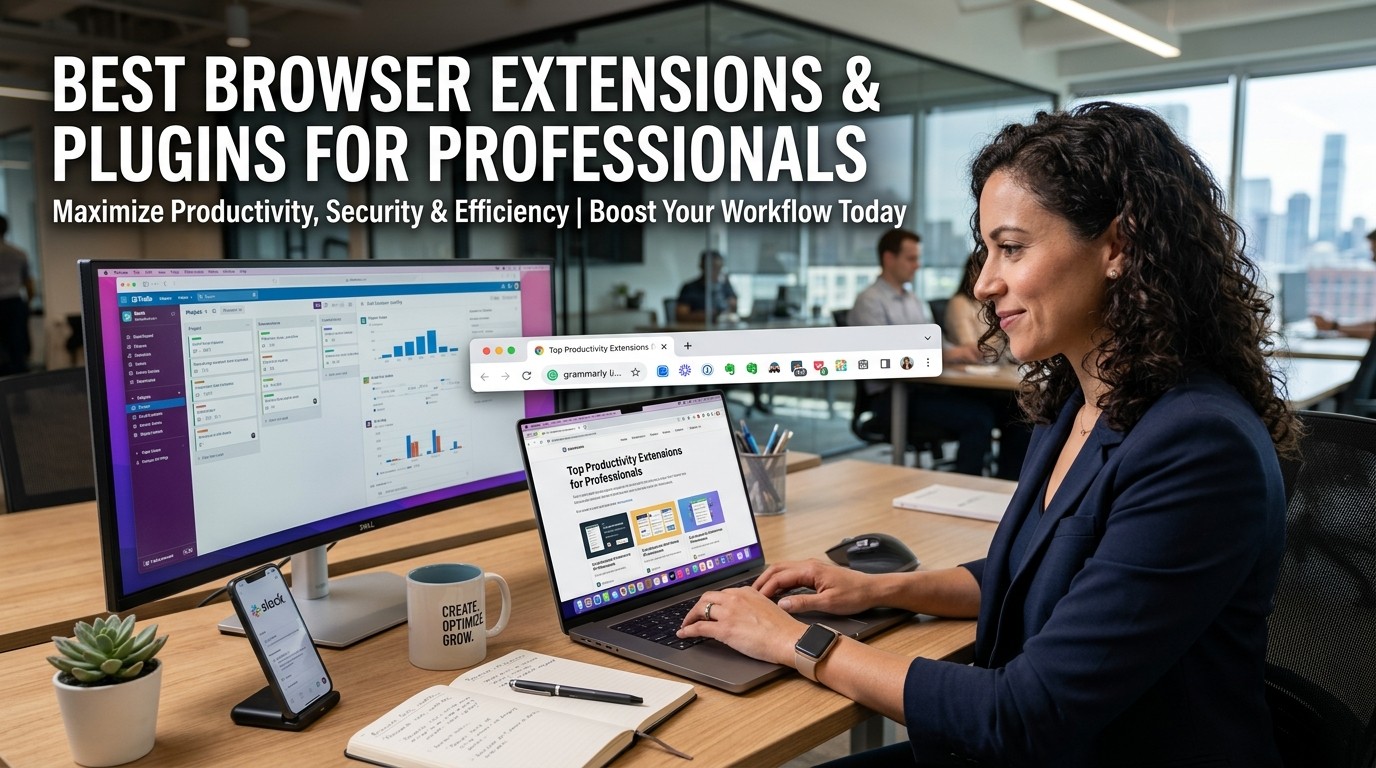
The Best Browser Extensions and Plugins help professionals work faster, stay safer, research smarter, and reduce friction across writing, security, SEO, and collaboration workflows.
The Best Browser Extensions and Plugins are less about collecting features and more about removing tiny daily frictions that slow real work down. Professionals spend hours inside the browser, so the right add-ons can save time on research, drafting, scheduling, tab handling, and security checks. Chrome, Firefox, and Edge all support extension ecosystems through official stores and add-on managers, which makes browser-based workflows a practical part of modern work rather than an optional extra.
The Best Browser Extensions and Plugins also matter because browser add-ons can request broad access, and the permission screen is often the first real sign of whether a tool is trustworthy. Chrome warns that some permissions may allow an extension to access websites you visit or even almost anything on your computer, while Firefox shows permissions during installation and lets you review them later. That means the smartest professional choice is not just “which extension looks useful,” but “which extension earns trust with the least access needed.”
How to choose tools that actually help
The Best Browser Extensions and Plugins should solve one clear problem at a time. If an extension claims to do everything, it often becomes clutter instead of leverage. A better rule is to pick tools that improve one workflow step: writing, SEO review, tab cleanup, task capture, or account security. That keeps your browser light and makes it easier to notice when something behaves oddly. Chrome’s install flow and Firefox’s permission prompts both reinforce this idea by making users approve access before the add-on can do its job.
The Best Browser Extensions and Plugins are also the ones that fit your browser environment. Chrome users usually start in the Chrome Web Store, Firefox users in Firefox Add-ons, and Edge users in Edge Add-ons. All three ecosystems are designed around browser-specific distribution and management, so choosing tools from the official source lowers the chance of installation problems and helps you evaluate permissions more clearly.
Productivity tools that pay back every day

The Best Browser Extensions and Plugins for productivity are the ones that reduce repetitive clicks. Think of note capture, quick copy tools, session organizers, calendar helpers, and lightweight automation. These are not glamorous tools, but they often save more time than flashy add-ons because they sit directly inside the work you already do. Microsoft’s Edge support pages explicitly highlight features like Collections for saving and organizing web ideas, and that same principle applies to extension-based productivity systems across browsers.
The Best Browser Extensions and Plugins for busy professionals often work best when they are invisible. A good productivity tool should not force you to change your entire process. It should fit into the process you already use and remove one annoying handoff. For example, a note-capture add-on that clips research into one place is more valuable than a feature-heavy extension you only open once a month. Firefox’s add-on system is built to let users install different kinds of extensions for practical tasks, which is exactly why this category remains so useful.
SEO and research tools for analysts, writers, and marketers
The Best Browser Extensions and Plugins for SEO professionals are usually the ones that shorten the path from question to answer. A Chrome SEO Extension can help with on-page checks, metadata review, keyword scanning, link inspection, or quick diagnostics while you browse. For teams working on technical SEO, content optimization, or competitor research, that browser-level visibility can remove a lot of manual switching between tabs and tools.
SEO work often requires fast inspection, so the Best Browser Extensions and Plugins in this category should show data without making you leave the page. That is why SEO Plugins for Firefox can be so useful for researchers who prefer Firefox as their daily browser. The browser itself supports add-ons designed to extend features, and the add-on permission model helps you judge how much access a research tool actually needs before you install it.
Writing and communication tools that reduce friction
The Best Browser Extensions and Plugins for writing are the ones that help you produce clearer work with less interruption. Grammar support, spelling help, quick formatting, reference capture, and readability helpers all fit here. For professionals who write emails, proposals, landing pages, reports, or internal updates, these tools can make the browser feel more like a workbench than a wall of open tabs. Browser ecosystems make this possible through official extension stores, where tools are installed directly into the daily workflow.
The Best Browser Extensions and Plugins for communication should also respect your focus. A good tool improves the message without hijacking the whole browser. That matters because professionals often work across multiple channels at once: email, chat, docs, and web apps. The most useful add-ons are the ones that make responses cleaner and faster while staying out of the way when they are not needed. This is one reason browser-native tools remain popular across productivity-focused teams.
Security and privacy tools are not optional
The Best Browser Extensions and Plugins for professionals should include security-first tools, because the browser is where credentials, documents, and business data often pass through every day. Password managers, tracker blockers, secure note tools, and phishing protection extensions can reduce risk without slowing the workflow too much. Chrome’s own guidance warns that some permissions may give an extension access to the websites you visit or even to nearly everything on your device, so security awareness starts before installation, not after a problem appears.
The Best Browser Extensions and Plugins in this category should also be simple enough that people actually keep them on. Microsoft highlights SmartScreen in Edge as a built-in protection against phishing and malware sites, which is a good reminder that security is strongest when built-in browser protections and carefully chosen extensions work together. Firefox also signs add-ons digitally and warns about add-ons that can change settings or steal information. Those platform-level protections are valuable, but they do not replace careful permission review.
Tab management and focus tools for heavy browser users
The Best Browser Extensions and Plugins for tab control can transform a messy browser into a usable workspace. If you regularly open dozens of tabs, then tab suspension, grouping, session saving, and one-click cleanup are not luxury features. They are productivity protection. Microsoft Edge already includes built-in tab organization features like grouping, and professionals who work across many projects often benefit from extending that habit with browser add-ons built for focus.
The Best Browser Extensions and Plugins in this category should reduce anxiety, not create it. A good tab tool helps you see what matters now and safely store what matters later. That matters because people lose momentum when the browser becomes visually overwhelming. A clean tab system supports better decisions, fewer mistakes, and less context switching across projects.
Screenshot, annotation, and research capture

The Best Browser Extensions and Plugins for research capture are ideal when your work involves collecting evidence, examples, or client references. Screenshot tools, annotation layers, web clipping, and page-saving extensions can turn a page you found into something you can actually use later. Firefox’s add-on ecosystem and Chrome’s Web Store both support this kind of browser extension workflow, which is why capture tools remain a staple for researchers and analysts.
The Best Browser Extensions and Plugins for this purpose should help you capture context, not just an image. Professionals usually need the source, the date, the page structure, or a short note about why the page mattered. Good capture tools reduce the chance that a great insight disappears into memory and never gets used again. Edge’s Collections feature shows the same idea in built-in form: gather useful material first, organize it later, and keep moving.
Collaboration tools for teams and client work
The Best Browser Extensions and Plugins for teams are the ones that improve handoffs. Shared note capture, quick task creation, meeting support, and browser-based document helpers can make collaboration smoother without forcing everyone into a new platform. This is especially useful when people move between email, chat, CRM, project boards, and documents all day. Browser add-ons are attractive here because they live where the work is already happening.
The Best Browser Extensions and Plugins for client-facing professionals should also be easy to standardize. If a tool requires a complicated setup, it tends to break the team’s rhythm. Browser ecosystems make distribution easier through official stores and, in the case of Chrome, admin controls for managed environments. That matters when IT or operations need to keep a standard toolkit across a team.
Browser tools for business operations and HR workflows
The Best Browser Extensions and Plugins are not only for marketers or writers. Teams using SaaS HR Management often rely on browser tools for onboarding, policy review, form filling, and employee workflow tasks. The browser is where many admin-heavy processes happen, so extensions that reduce repetitive checks or speed up document handling can pay off quickly in people operations.
The Best Browser Extensions and Plugins can also support teams that monitor SaaS Security News, because browser security habits affect every department, not just IT. If an extension asks for broad access, a cautious review is worth the time, especially in a business environment where one risky add-on can affect many users. Chrome enterprise policies even let administrators allow or block extensions on managed devices, which shows how seriously organizations treat extension governance.
Permissions, privacy, and the trust test
The Best Browser Extensions and Plugins are not the ones with the longest feature lists; they are the ones that ask for the least access needed to do the job. Chrome’s permission guidance explains that some requests can reach very broad access levels, and Firefox shows permission requests so users can approve or decline them during installation. That means permission review is not a technical extra. It is the core of safe extension selection.
The Best Browser Extensions and Plugins should be installed from official stores whenever possible. Chrome Web Store, Firefox Add-ons, and Edge Add-ons are the normal paths for most users, and browser vendors also document how to install, manage, and remove extensions. If a tool is hard to find, difficult to uninstall, or installed from an unknown source, that is usually a warning sign rather than a clever workaround.
How to build a clean professional stack
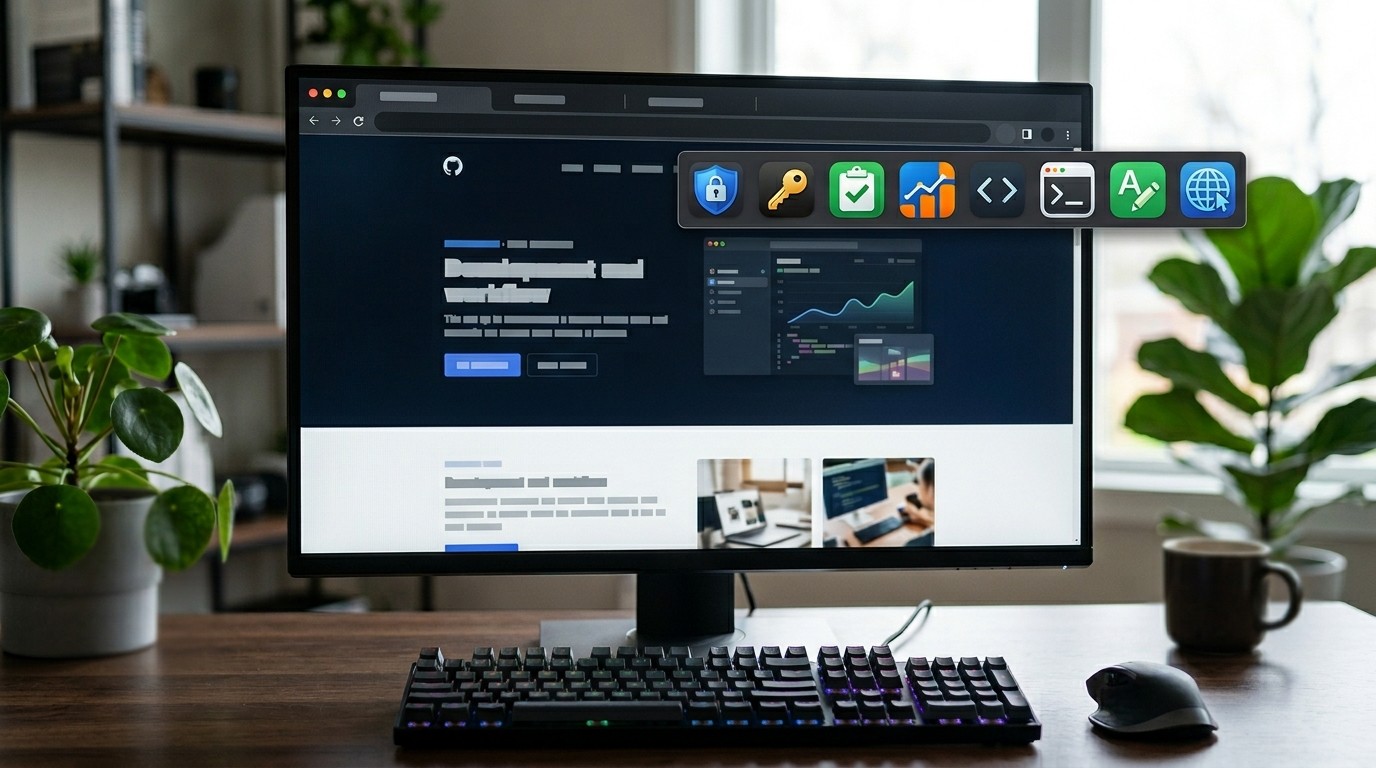
The Best Browser Extensions and Plugins usually work best in a small stack, not a giant one. Most professionals need a few dependable categories: security, research, writing, capture, and tab organization. Once those are covered, adding more extensions often creates overlap rather than value. The browser should feel lighter after installation, not heavier.
The Best Browser Extensions and Plugins should also be reviewed occasionally. A tool that was useful six months ago may no longer fit your workflow, and unused add-ons still deserve attention because permissions do not disappear just because the extension is idle. Browser vendors give users ways to manage or remove extensions, which makes cleanup a normal part of professional browser hygiene.
A simple selection framework
The Best Browser Extensions and Plugins are easiest to choose when you ask four questions: Does it save time? Does it reduce risk? Does it fit my browser? Does it ask for sensible permissions? If the answer is yes to all four, you probably have a keeper. If the answer is no to any of them, the tool may be more attractive than useful.
The Best Browser Extensions and Plugins should also match the way you actually work. A researcher, an HR generalist, a sales rep, and a technical SEO specialist will not need the same stack. That is why a tool can be excellent in one workflow and unnecessary in another. The point is not to install the most popular extension. The point is to install the one that solves your real bottleneck.
Quick recommendations by workflow
The Best Browser Extensions and Plugins for a writer usually focus on drafting, grammar, and source capture. The Best Browser Extensions and Plugins for an SEO professional usually focus on page analysis, metadata checks, and research speed. The Best Browser Extensions and Plugins for security-conscious users usually focus on password management, tracking reduction, and permission discipline. Chrome, Firefox, and Edge all support this kind of specialization through their official extension ecosystems.
The Best Browser Extensions and Plugins for professionals who work across many tabs usually focus on organization and focus. Edge’s own support pages highlight tab and collection-style organization features, which is a strong clue that browser clutter is a common productivity issue. If your day feels fragmented, the right extension stack should make the browser calmer, not more chaotic.
Conclusion
The most useful browser add-ons are the ones that solve real workflow problems without creating new ones. Start with a small stack that covers research, writing, security, and tab management, then review permissions carefully before installing anything broad or vague. Use official stores, keep the list lean, and remove tools that no longer earn their place. When a browser setup is deliberate, it becomes easier to stay focused, safer to work online, and faster to move from one task to the next. For professionals, that combination usually matters more than having the longest extension list.
Frequently Asked Questions (FAQ)
1. What are the Best Browser Extensions and Plugins for most professionals?
The Best Browser Extensions and Plugins for most professionals are the ones that improve productivity, security, and research without demanding unnecessary permissions.
2. Should I use Chrome, Firefox, or Edge extensions?
The Best Browser Extensions and Plugins can be found in all three ecosystems, and the right choice depends on which browser you already use most.
3. Are browser extensions safe?
The Best Browser Extensions and Plugins are safe when they come from official stores, have sensible permissions, and are removed if they stop being useful.
4. What permissions should worry me most?
The Best Browser Extensions and Plugins should never ask for more access than they need. Broad access to sites or personal data deserves extra scrutiny.
5. Do I need SEO tools in the browser?
The Best Browser Extensions and Plugins for SEO are useful when you need fast on-page checks, quick research, or lightweight diagnostics while browsing.
6. Why do professionals use browser add-ons at all?
The Best Browser Extensions and Plugins help remove small friction points that add up during a workday, especially in research-heavy or communication-heavy roles.
7. Can extensions help with security?
The Best Browser Extensions and Plugins can help with security if they support password management, tracking reduction, or safer browsing habits. Browser vendors also build protections like SmartScreen and add-on signing into their platforms.
8. How many extensions should I keep installed?
The Best Browser Extensions and Plugins stack is usually small. Keep only the tools that solve a real problem and remove duplicates or abandoned add-ons.
9. What is the best way to manage extension clutter?
The Best Browser Extensions and Plugins are easier to manage when you review permissions regularly and uninstall tools you no longer need. Chrome and Firefox both document how to manage or remove extensions.
10. What is the most important rule to remember?
The Best Browser Extensions and Plugins should earn trust through usefulness, official distribution, and minimal permissions, not just through popularity.



Leave a Reply