

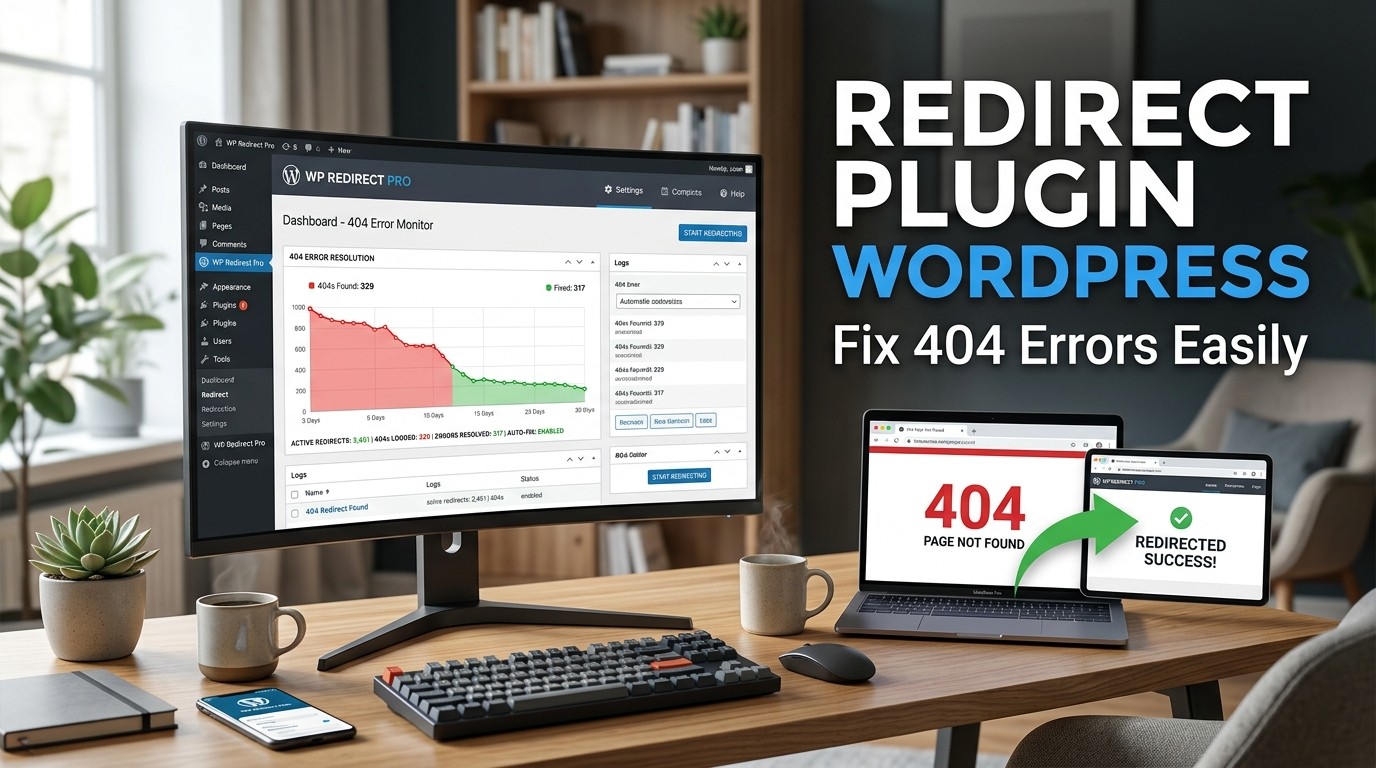
A Redirect Plugin WordPress helps you recover lost traffic, guide visitors to the right pages, and keep old URLs useful when content changes, links break, or site structure evolves.
A Redirect Plugin WordPress matters because a 404 means the server could not find the requested resource, and that dead end usually feels broken to both visitors and search engines. MDN defines 404 Not Found as the response when the resource cannot be located, and it notes that broken links are often associated with link rot.
A Redirect Plugin WordPress also protects the reader experience. When someone clicks a link and lands on a dead page, they often leave quickly, but when the same click lands on a useful replacement, the site feels maintained and trustworthy. WordPress support threads note that WordPress itself does not provide built-in settings for redirect functionality, which is why a plugin is the normal solution.
A Redirect Plugin WordPress is especially important after a site grows, because old URLs, external backlinks, and internal references keep working long after the content has moved. The Redirection plugin page says it manages 301 redirects and keeps track of 404 errors, which shows how redirect tools are designed for both cleanup and monitoring.
What redirects actually do
A Redirect Plugin WordPress gives you a way to send visitors from an old URL to a new one, usually with a 301 redirect when the move is permanent. That matters because a proper redirect preserves continuity instead of leaving search engines and people at a dead end. Simple 301 Redirects and 404 to 301 both describe this kind of URL handoff as their core purpose.
A Redirect Plugin WordPress is useful when content gets merged, updated, renamed, or removed. If a post slug changes, the old address still needs somewhere logical to go, and a redirect gives that address a new home. The Redirection plugin is built for sites with a few redirects or thousands, which makes it suitable for small blogs and large content libraries alike.
A Redirect Plugin WordPress can also help preserve the value of existing links. A post that has been linked in newsletters, social posts, or other websites should not become useless the moment its URL changes. Redirect tools keep the path intact, which is one reason they are a standard maintenance tool on content-heavy WordPress sites.
Common causes of broken links

A Redirect Plugin WordPress becomes necessary for ordinary site changes, not just emergencies. Broken links often appear after a page is deleted, a category is reorganized, a slug is edited, or a plugin changes how URLs are handled. WordPress support threads also note that permalink issues can sometimes be resolved by re-saving the Permalinks settings, which writes the rules back into the site’s configuration.
A Redirect Plugin WordPress is often part of the fix when site owners discover that traffic is still reaching old URLs from search results or bookmarks. Those links may have been valid for months or years, so the problem is not that anyone did something wrong; it is that the web remembers longer than people expect. Redirects give old paths a practical exit.
A Redirect Plugin WordPress also helps when content is removed during a redesign, migration, or cleanup. Some pages no longer deserve to exist in the same form, but that does not mean visitors should fall into a blank wall. A smart redirect makes the site feel edited rather than abandoned.
Choosing the right plugin
A Redirect Plugin WordPress should be judged by more than the number of features in its description. The most important qualities are reliability, clear rules, logging, and the ability to handle both simple and complex use cases without turning the dashboard into a puzzle. The Redirection plugin emphasizes 301 management and 404 tracking, while other plugins such as Simple 301 Redirects focus on quick, direct forwarding.
A Redirect Plugin WordPress should also match the size of the task. A small blog with a few changed URLs may only need a lightweight rule-based tool, while a larger content site may benefit from logging, bulk management, or automatic handling for recurring 404s. The plugin directory shows that some redirect tools are built specifically for broad 404 handling, including automatic redirects to the homepage or similar posts.
A Redirect Plugin WordPress is easiest to live with when the interface is clear and the behavior is predictable. If a plugin makes it hard to see which URLs are being redirected, how many 404s are being tracked, or what status code is being used, the tool can create more stress than it removes. Good redirect tools should simplify the site owner’s work, not hide it.
Redirect types explained
A Redirect Plugin WordPress should help you distinguish between permanent and temporary routing. A 301 redirect is the common choice when a page has moved for good, while other status codes may be used in narrower cases. The plugin directory pages for Redirection, 404 to 301, and Simple 301 Redirects all emphasize permanent-style forwarding as the main use case.
A Redirect Plugin WordPress is most effective when the redirect type matches the reason for the change. If a post has a new permanent slug, a 301 is usually the right fit. If a page is only temporarily unavailable, the situation is different, and the redirect rule should be chosen with care rather than copied blindly from a tutorial.
A Redirect Plugin WordPress should also help you avoid overusing automatic redirects. Some plugins can redirect 404s to the homepage or a related post, but that is not always the best answer. When the destination is too vague, the visitor loses context, and the site can feel misleading instead of helpful.
Setting up the first rule
A Redirect Plugin WordPress usually starts with a simple rule: source URL, destination URL, and status code. That setup is enough for most small fixes, and it is the right place to begin if you are cleaning up one broken post, one outdated landing page, or one migration path that needs to remain usable. The core logic is simple because the problem is simple.
A Redirect Plugin WordPress becomes easier to manage when you test one rule at a time. After adding the redirect, open the old URL in a private browser window and confirm that it lands where expected. This small habit helps catch typos, loops, and accidental misroutes before they affect readers or search crawlers.
A Redirect Plugin WordPress should also be used with a naming or note system if you manage many rules. Even a simple note like “old article, merged into new guide” can save time later when you revisit the dashboard. That habit becomes more important as the site grows and the number of redirects increases.
After a migration or slug change
A Redirect Plugin WordPress is one of the first tools you should consider after changing permalinks, migrating a site, or renaming a major section. WordPress support guidance suggests that permalink issues may sometimes be fixed by re-saving the Permalinks settings, but that does not replace the need for proper redirects when old URLs still matter.
A Redirect Plugin WordPress can protect older backlinks during a redesign. If a page has inbound traffic from search or social media, a redirect keeps that traffic alive after the page’s structure changes. In practical terms, the redirect is a bridge between the old version of the site and the new one.
A Redirect Plugin WordPress is also useful when a post slug changes for clarity or SEO cleanup. New titles often create better URLs, but the old URL may still be indexed or bookmarked. Redirecting it is better than hoping users will find the new address on their own.
Monitoring 404 patterns
A Redirect Plugin WordPress is more valuable when it does more than send people away from broken URLs. The Redirection plugin specifically says it keeps track of 404 errors, which turns your redirect tool into a small observability system for the site. That makes it easier to see which links are breaking repeatedly and which ones need permanent cleanup.
A Redirect Plugin WordPress can reveal patterns that you would otherwise miss. If the same broken URL keeps appearing in logs, the issue may not be one bad link but a repeated reference in menus, emails, or old content. Fixing the source usually matters more than patching the symptom again and again.
A Redirect Plugin WordPress also helps you distinguish between a one-off mistake and a real structural issue. When 404s appear across many related pages, the problem may be broader than a single broken post. That is exactly where redirect logs become useful, because they show whether the site needs a one-page fix or a deeper cleanup.
Sitemaps and crawlability

A Redirect Plugin WordPress works best when the rest of the site structure is healthy. WordPress introduced basic, extensible XML sitemap functionality in core with WordPress 5.5, which means many sites already have a sitemap foundation without needing a separate plugin. A sitemap helps search engines discover content, while redirects help them move past old paths correctly.
A Redirect Plugin WordPress still pairs well with a dedicated XML Sitemap Plugin when a site wants additional control, specialized sitemap types, or extra configuration. The plugin directory includes sitemap tools that generate XML and HTML sitemaps, support custom post types and taxonomies, and help search engines index content more efficiently.
A Redirect Plugin WordPress should be part of the same thinking as sitemaps because both are about discoverability. One tells search engines what exists now, while the other catches traffic that still points to what existed before. Together they reduce confusion and help the site stay coherent as content changes over time.
Broken link cleanup
A Redirect Plugin WordPress becomes much more effective when paired with regular link checks. Broken Link Checker, for example, scans pages, posts, comments, and custom fields, and its plugin page says it spots broken or redirected URLs while giving you a way to fix them from one dashboard. That makes ongoing cleanup much less manual.
A Redirect Plugin WordPress can reduce recurring 404s, but it will not fix the original broken references unless you update the content too. That is why a link checker matters. It tells you which posts still point to dead places, so you can update the source content instead of endlessly stacking redirects on top of old mistakes.
A Redirect Plugin WordPress works best in combination with a link-audit habit. If you publish regularly, links age, destinations vanish, and pages get merged. A scanning tool gives you a map of those changes, and the redirect tool gives you a route around them. That pairing is what keeps an older blog from slowly decaying.
Theme updates and licensing
A Redirect Plugin WordPress does not operate in isolation, because site themes and templates can affect how pages behave after changes. If you need to Update GPL Themes, the WordPress theme handbook says all code, data, and images in a theme zip must comply with the GPL or a GPL-compatible license, and the official theme review team enforces those requirements.
A Redirect Plugin WordPress is also part of the wider maintenance conversation around Premium Vs Free Themes. WordPress.org has a commercial GPL themes page that explains some providers offer paid support or related services around GPL themes, which means pricing and licensing are not the same thing. The important point is to understand what you are paying for and what license rules still apply.
A Redirect Plugin WordPress can become especially relevant after a theme change because menus, templates, and archive layouts may shift how old links are surfaced. When that happens, redirects help soften the transition for users and search engines while the rest of the site settles into its new structure.
SEO and user trust
A Redirect Plugin WordPress helps protect SEO in a very practical way: it keeps old links from stopping at a dead page. Search engines and users both prefer paths that still work, and redirect rules are one of the simplest ways to preserve continuity after a URL changes or content moves.
A Redirect Plugin WordPress also helps user trust because a working path feels intentional. Readers usually do not care whether a site used a new slug, a new category, or a new plugin. They care that the click worked. If the site reliably sends them to the right place, the website feels organized and professionally maintained.
A Redirect Plugin WordPress should therefore be part of content hygiene, not an afterthought. Redirects, sitemaps, and link auditing all support the same goal: keep the content graph readable for humans and crawlers. When those parts work together, the site becomes easier to navigate and easier to grow without creating avoidable dead ends.
Ongoing maintenance habits
A Redirect Plugin WordPress is most valuable when it is used alongside a routine. Check new 404s, review redirects after major edits, and keep an eye on pages that were recently merged or renamed. That habit costs very little time, but it prevents old URLs from piling up into a confusing mess.
A Redirect Plugin WordPress should also be tested after plugin updates, theme updates, or permalink changes. WordPress support discussions show that rewrite-related 404s can sometimes be fixed by refreshing permalinks, which reminds site owners that URL behavior is not something to assume; it should be checked.
A Redirect Plugin WordPress is easiest to manage when you treat redirects like living site infrastructure. As content changes, the redirect map should change too. That may mean removing obsolete rules, adding new ones, or improving the destination of a page that now has a better replacement. Small maintenance keeps the system honest.
A Redirect Plugin WordPress becomes even more useful when it sits inside a broader cleanup system. Run a Broken Link Checker scan, review sitemap coverage, and compare old URLs with current content. This turns redirect management into a repeatable process rather than a frantic response after a reader reports a broken page.
Practical mistakes to avoid
A Redirect Plugin WordPress can create problems if every broken link is sent to the homepage without thought. The homepage is not always the right answer, because it can confuse visitors and hide the real destination. A better redirect sends users to the most relevant page, not just the nearest convenient one.
A Redirect Plugin WordPress should not be used to cover up poor content organization. If a post was deleted, a category was merged, or a page was renamed, the redirect is only one part of the fix. The underlying structure should also be cleaned so the same problem does not return in another place.
A Redirect Plugin WordPress is also less effective when old internal links are never updated. Redirects catch the external traffic and bookmarked traffic, but internal links should still point directly to the correct URL. That is why link checking and content editing are part of the same maintenance habit.
A simple workflow for busy site owners

A Redirect Plugin WordPress workflow can stay lightweight if you keep it consistent. First, identify the 404 source. Second, decide whether the page should move, merge, or disappear. Third, set the redirect only when it has a meaningful destination. Fourth, test the rule and then record it so you can find it later.
A Redirect Plugin WordPress workflow becomes easier when you review redirects during content updates rather than months later. Whenever you rewrite a post, refresh a category, or update a theme, check whether old paths still point somewhere useful. That habit reduces surprise and keeps the site stable as the editorial structure changes.
A Redirect Plugin WordPress workflow also benefits from a short monthly audit. Review the newest 404s, confirm that major pages still resolve properly, and make sure your sitemap still reflects the current structure. You do not need a complex process to stay on top of this; you just need a regular one.
Conclusion
A Redirect Plugin WordPress gives site owners a clean way to fix 404 errors without losing users, links, or search value. It works best when it is part of a broader maintenance habit that includes checking broken links, keeping sitemaps current, and updating content when URLs change. WordPress core provides sitemap functionality, WordPress support confirms redirects are usually handled through plugins, and popular redirect tools focus on 301 rules and 404 tracking. Used well, the system keeps old paths useful and the site easier to trust. That is the real goal: fewer dead ends, clearer navigation, and a website that feels maintained instead of abandoned.
Frequently Asked Questions (FAQ)
1. What does a 404 error mean?
A 404 means the server could not find the requested resource, so the page or file is not available at that address.
2. Do I need a plugin to make redirects in WordPress?
Usually yes. WordPress support says WordPress does not provide settings for redirect functionality, so a plugin is the normal approach.
3. What kind of redirect should I use for a moved page?
A permanent move usually uses a 301 redirect, which is the main use case emphasized by common redirect plugins.
4. Can a redirect plugin track broken links too?
Yes. The Redirection plugin says it keeps track of 404 errors, and that is one reason it helps with ongoing cleanup.
5. How do I find bad links faster?
A Broken Link Checker can scan pages, posts, comments, and custom fields, then show broken or redirected URLs from one dashboard.
6. Does WordPress have sitemaps already?
Yes. WordPress 5.5 introduced basic, extensible XML sitemap functionality in core.
7. Why do theme changes matter for redirects?
Theme changes can alter menus, layouts, or URL presentation, so old paths and content references may need cleanup after updates.
8. What should I do after changing permalinks?
Re-save the Permalinks settings if rewrite rules look broken, and then check whether old URLs need redirects to preserve access.
9. Are free and premium themes handled the same way under GPL?
WordPress.org explains that GPL compatibility is required, and commercial GPL theme providers may charge for support or services rather than for the license itself.
10. What is the safest maintenance habit?
Review new 404s regularly, update redirects when content changes, and keep your sitemap and internal links aligned with the current site structure.



Leave a Reply